How to Interpret MAP Growth Score

Now that we have overcome the technical difficulties hurdle of MAP Testing, your students may have remembered to write down their scores when they finished the test. If you are looking for some guidance on how to interpret the range of scores, NWEA has some great resources.

Your students should have encountered some questions beyond their current understanding of the subject. This is typical of adaptive testing, which starts the students with level-appropriate questions, then depending on the speed and accuracy of their answers, increases or decreases the difficulties of subsequent questions.

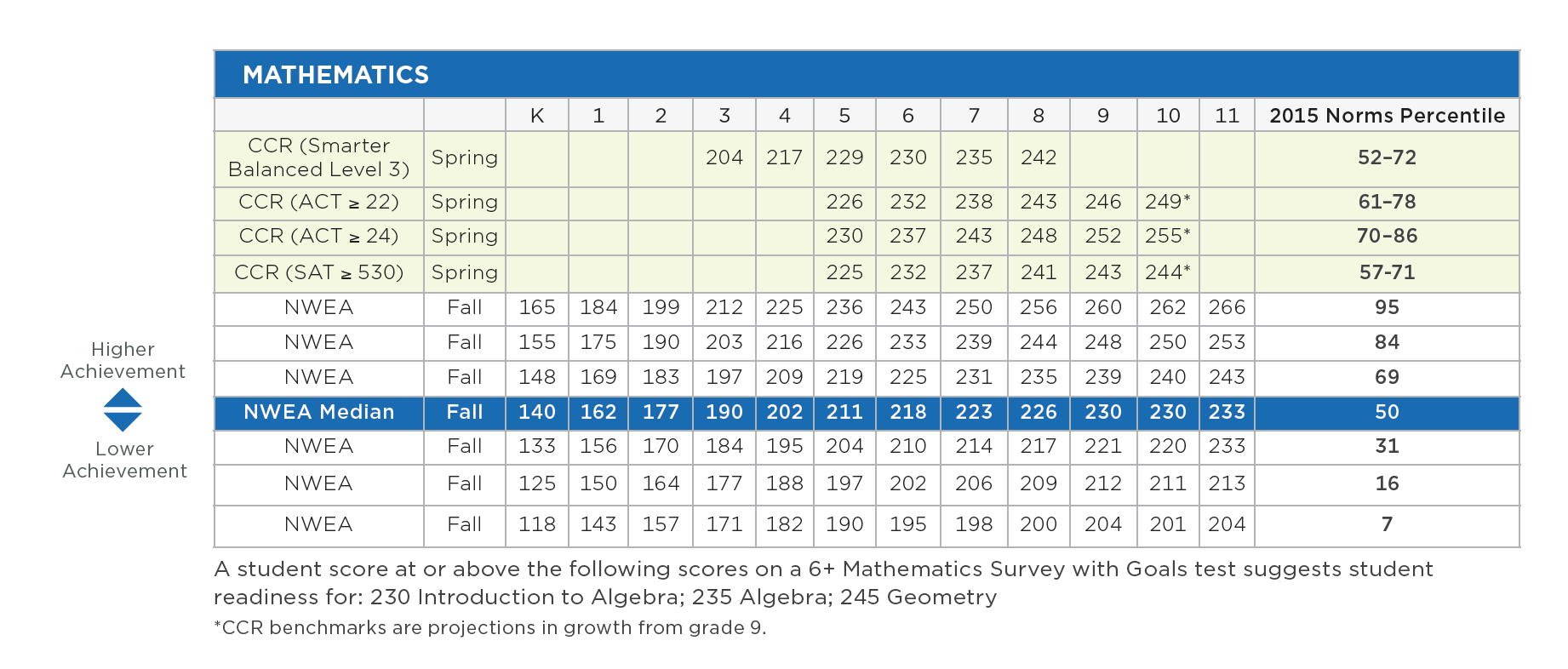
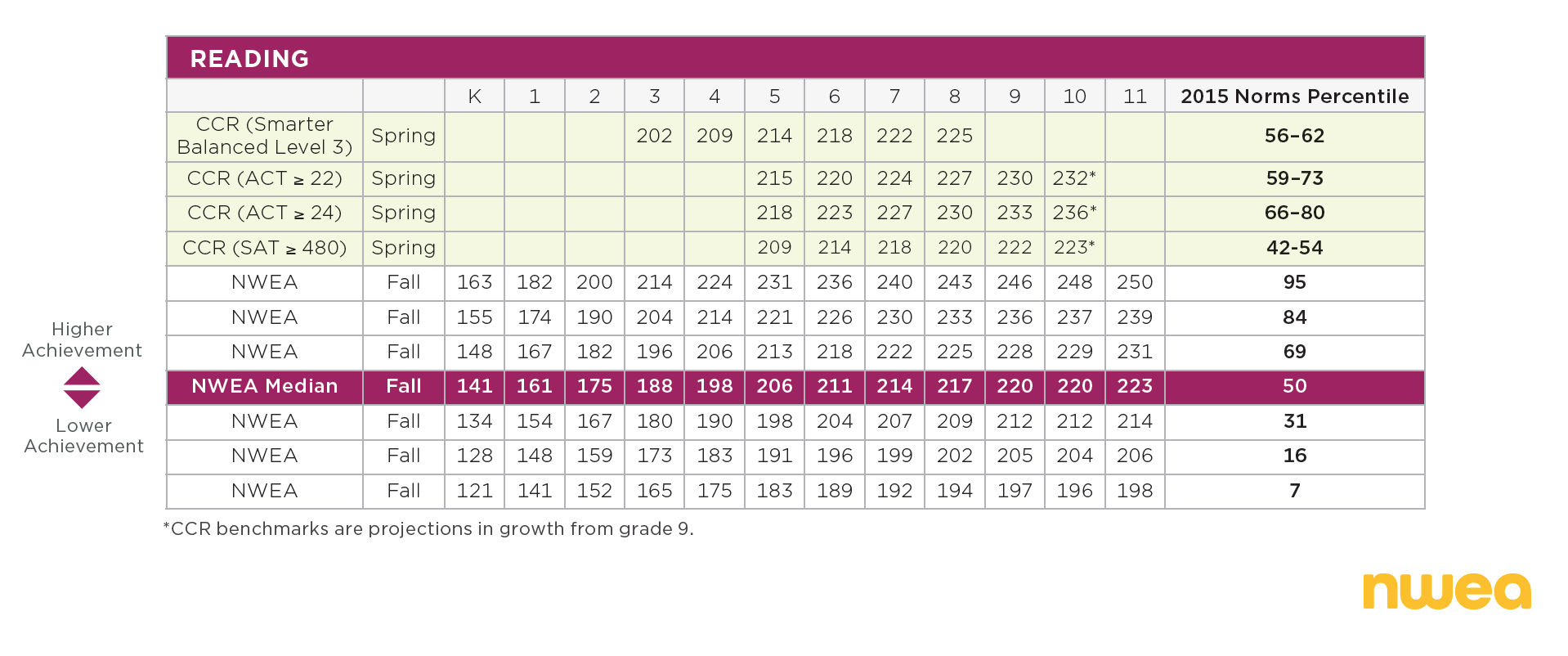
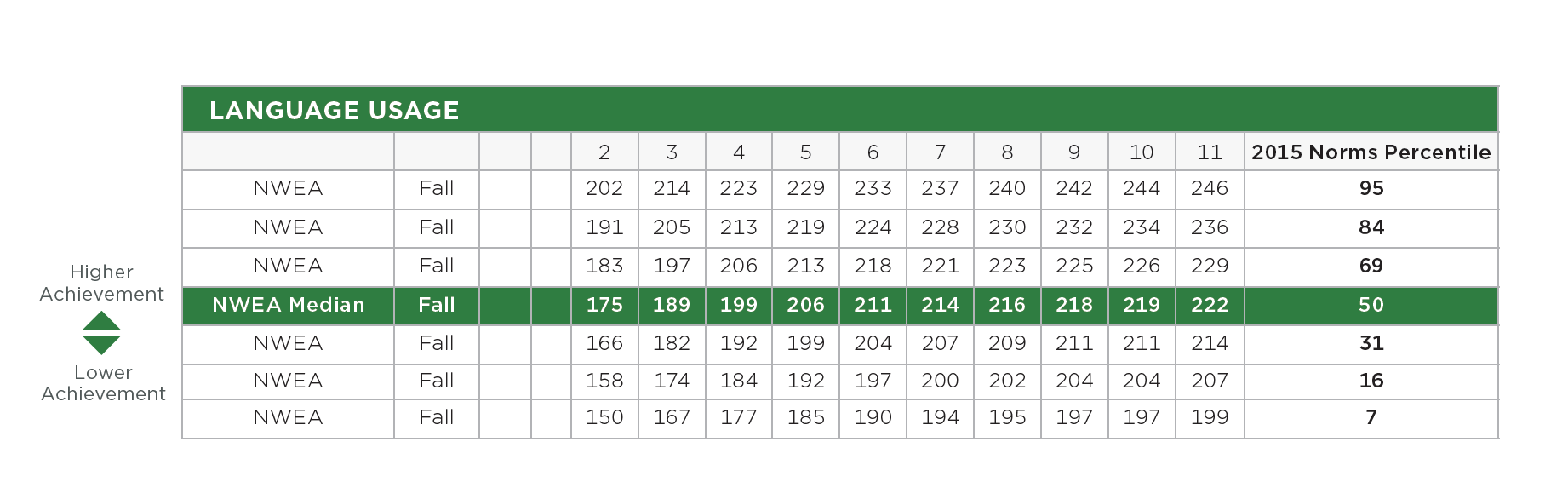
Students will be given a RIT score at the end of the test. “RIT stands for Rasch UnIT, which is a measurement scale developed to simplify the interpretation of test scores. RIT scores range from about 100 to 300. Students typically start at the 180 to 200 level in the third grade and progress to the 220 to 260 level by high school”(NWEA, 2019). RIT is grade independent, which helps parents compare a student’s growth continuously throughout their K-12 education. If my 8th grader has the same math RIT score as my 10th grader, it means they are comparable in their math capabilities at the testing point. However, if a 2nd grader has the same RIT score as a 7th grader, it doesn’t mean the 2nd grader is at the same level of the 7th grader, because they took two different sets of MAP tests.

NWEA has a report explaining the percentiles and grade comparison of RIT scores based on 2015 data. I attached some charts from the report (NWEA, 2015)

Math
Reading
Language
Remember this test is one of many your child will be taking throughout this year and beyond. You will receive a more detailed report of each areas they have been tested on.

Have fun reading the charts!

Benchmark Testing

Aug 19-20, 2019

The first benchmark testing for the 2019-2020 ALVA school year is just around the corner. Regardless of how we feel about the pros and cons of testing and exams, this is a great opportunity for us to gain insight into our children’s current level of mastery in the subjects of Math and Language Arts. Our children are understandably nervous; frankly we may be anxious as well. In this post, I have gathered important information regarding the new MAP Growth testing ALVA has adopted. I do hope you find it useful.

What is MAP Growth?

MAP Growth® is an assessment tool developed by the non-profit organization NWEA(Northwest Evaluation Association). It is an adaptive computer-based testing system designed to track students’ growth throughout the year.

How is the test administered?

Students will be taking their MAP Growth assessment in their reading and math classes and will be virtually monitored by teachers and staff. Students are required to use webcams and have their microphones turned on so that staff can effectively monitor the testing environment.

What is the test like?

MAP Growth is a computer-adaptive test. If your student answers a question correctly, the next question is more challenging. If they answer incorrectly, the next one is easier. So if your child is getting frustrated because he or she does not know the answer, don’t panic! The assessment won’t stop until it has correctly gauged your children’s level of understanding in the subject. It can take anywhere from 30 minutes to 90 minutes for each test.

What are the dates of MAP Growth?

  • Beginning of Year (BOY) Assessment – August 19 & 20
  • Interim I – September 30 & October 1
  • Middle of Year (MOY) Assessment – January 6 & 7
  • Interim II – March 2 & 3
  • End of Year (EOY) Assessment – May 11 & 12

Can I get more information?

MAP Growth parent information sessions will be held on August 14. You can find the links for the information sessions by going to “My Schedule” on the Learning Coach home page. Sessions will appear on the schedule for August 14, 2019.

  • K-2 – 9:00 am and 5:00 pm
  • 3-5 – 10:00 am and 6:00 pm
  • 6-12 – 11:00 am and 7:00 pm

Resource links

Use these links to access informational videos about MAP growth as well as to take practice tests.

K-2 – https://studentresources.nwea.org/app/k_two/k_to_two.html

3-12 – https://studentresources.nwea.org/app/gradetwoplus/gradeTwoPlus.html

MAP Growth Accessibility Features

Here is a video explaining how to use the accessibility features.

Beginning of School Checklist

My kids have refused to do anything this week.

I considered joining them, but decided against it since I am after all, an adult, and I have made promises that I intend to keep. One of the promises is to produce a “Beginning of School Checklist” for our new parents who are joining ALVA this year (WELCOME!)

I feel hypocritical writing this post. My kids’ K12 boxes are sitting in front of the couch, unopened for the most part. Their desks are buried under books, scratch papers, watercolor pencils, and candy wrappers. I did check their course registrations to make sure they are enrolled.

I am certain I was more prepared four years ago when my kids first started with ALVA. I knew it because I got them brand new desks with built in bookshelves, stocked with school supplies. I even bought an automatic pencil-sharpener. So for you new parents out there looking for a school supply list, may you be as relaxed as I am right now in two years, without the guilt.

My point is that you will be fine. You may not feel fine at the moment, or when school starts. You may still be struggling one month into the school, or later. But you will be fine, and your kids will be ok. The fact you are stressing over the beginning of school is good indication you will overcome whatever obstacles may come your way because you care.

You must care deeply because you have chosen an unconventional road for your children and yourself. Maybe it’s because you had no other choice. I’ve also been there. So I am going to offer you what I have, and hope it eases your concerns.

  • Set up your OLS Login and explore the Learning Management interface.
  • Check your student’s materials to ensure they have received all of their books and supplies.
  • If your student is in the upper level (6th and up), the following tips apply:
    • It may be a good idea to get him or her a dedicated laptop, or desktop computer. I would not recommend an iPad or Chromebook, as they may not be compatible with the learning management system and Blackboard Collaborate.
    • Have your student sign up for a Google email address, and use Google Drive to set up dedicated folders for each of their courses. They will store their assignments throughout the year there. You can also do that on a local drive, but it’s good to have backup.
    • Buy a planner. They will use it to plan for their assignments, which I will explain in a later post. Go ahead and get them a planner. A whiteboard or family calendar can serve the same purpose, but I prefer each of my kids to have their own so they can learn to be responsible.
    • Make sure their computers are equipped with webcam and microphone.
  • If your student is in the Elementary school, the following tips apply:
    • Have a dedicated space for “doing school” each day. This will help you and your children stay organized and mentally “ready” to engage with learning.
    • Get them earphones with mic. Young children are easily distracted and it’s difficult for them to focus in Class Connect sometimes. Isolating other noises can help.
    • Organize their books by subject. LA, History and Science have many readings, you will want to be able to find them easily.
    • Get a pencil sharpener!

I will be posting regularly as school starts. Leave a comment or ask any questions you may have. Welcome to the ALVA family!

Design a site like this with WordPress.com
Get started